Jul 29, 2026Manufacturing Process
Injection Molding vs Rotational Molding Pickleball Balls: How Different Manufacturing Processes Affect Performance
A balanced comparison of injection molding and rotational molding for pickleballs, explaining why product design, materials and process control determine performance.
Understanding Pickleball Ball Manufacturing Technology
When choosing a pickleball ball, most players focus on appearance, color, hole design, and price.
However, the manufacturing process behind the ball has a significant impact on its performance, durability, consistency, and playing experience.
The two common manufacturing methods for pickleball balls are:
- Injection molding
- Rotational molding (rotomolding)
Each technology has its own advantages and is suitable for different playing environments and user groups.
At Synly Pickleball, we study different manufacturing technologies and material combinations to develop pickleball products that meet various market requirements.
Injection Molded Pickleball Balls
What Is Injection Molding?
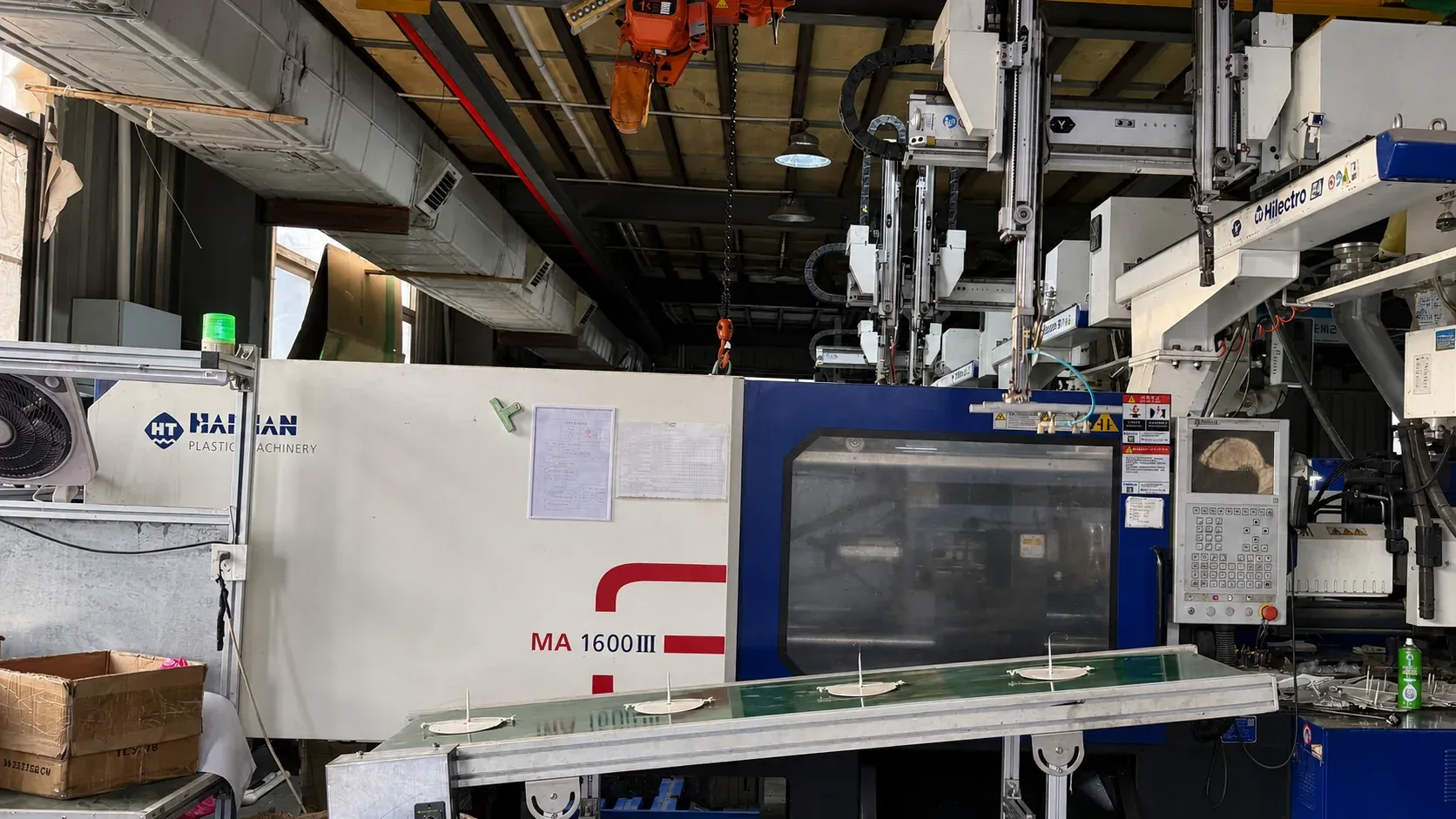
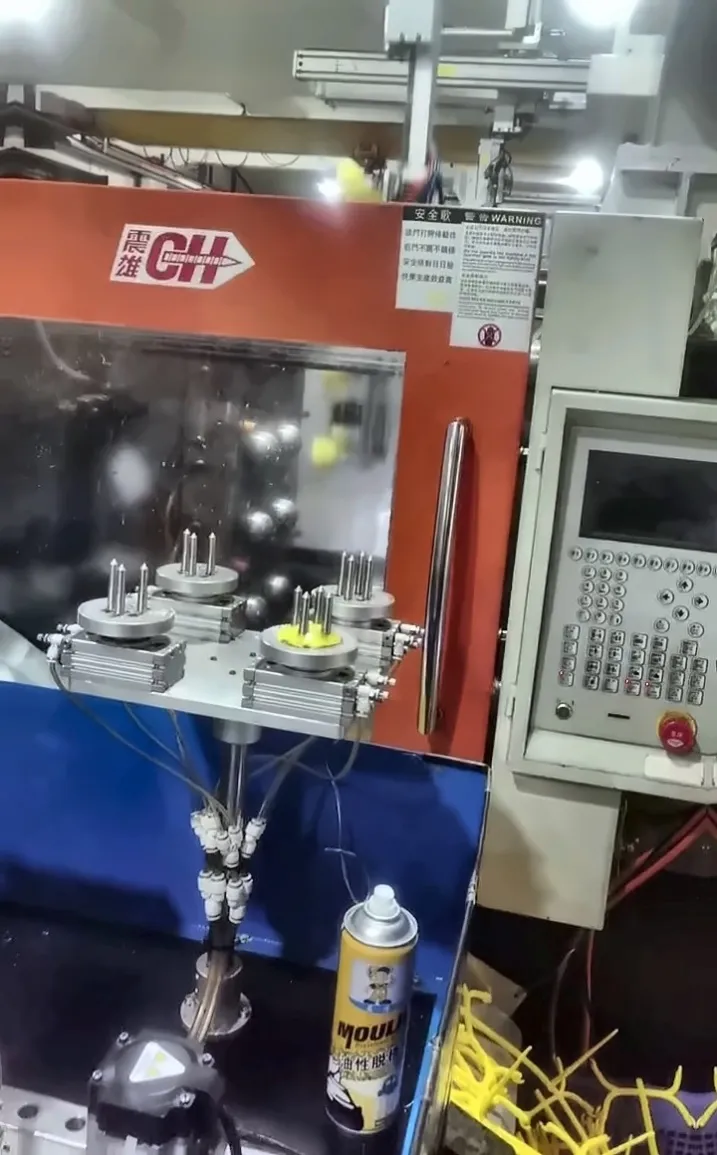
Injection molding is a high-precision manufacturing process where heated plastic material is injected into a specially designed mold under controlled pressure.
After cooling, the ball obtains a consistent shape, thickness, and surface structure.
This technology is widely used for professional and large-scale pickleball production because it provides excellent repeatability and manufacturing efficiency.
Advantages of Injection Molded Pickleball Balls
1. Better Production Consistency
Injection molding allows precise control of:
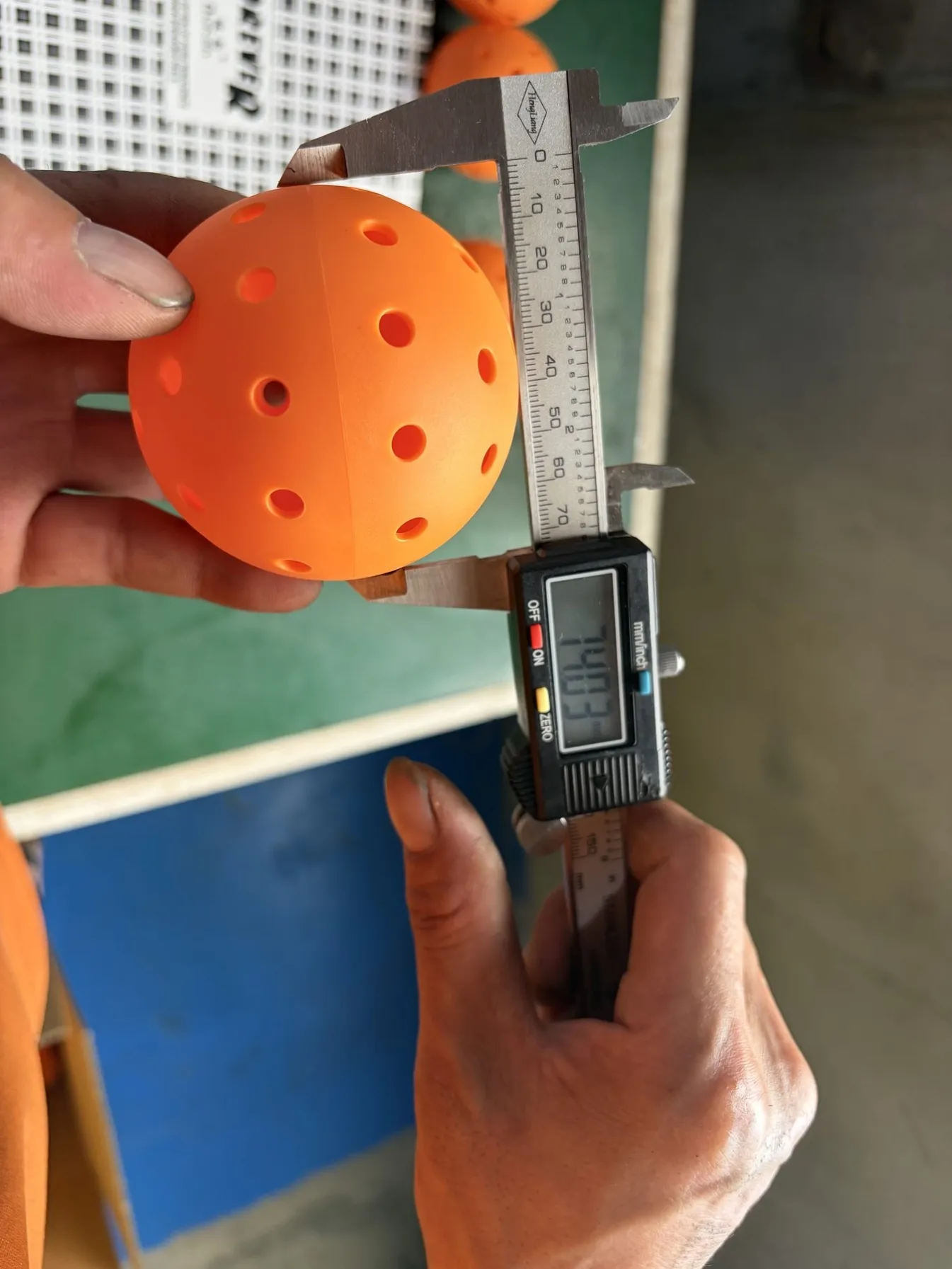
- Ball diameter
- Wall thickness
- Weight distribution
- Hole structure
This consistency helps players experience more predictable flight performance.
For tournament-level products, manufacturing accuracy is extremely important.
2. Stable Bounce Performance
Because the material distribution is more uniform, injection molded balls usually provide:
- More consistent rebound
- Stable deformation recovery
- Predictable playing feedback
This makes them suitable for players who require repeatable performance.
3. Suitable for Outdoor Competitive Play
Outdoor pickleball environments often include:
- Hard courts
- Concrete surfaces
- Asphalt courts
- Higher impact frequency
The ball experiences repeated high-speed impacts.
Injection molded balls can be engineered with specific polymer formulas to improve:
- Crack resistance
- Impact durability
- Weather resistance
Recommended Users for Injection Molded Pickleball Balls
Injection molded balls are suitable for:
Professional Players
Players who participate in tournaments need consistent flight and bounce characteristics.
Advanced Players
Experienced players usually prefer predictable ball response during fast rallies.
Pickleball Clubs
Clubs require reliable products that can handle frequent training sessions.
Commercial Facilities
Sports centers need durable balls with stable quality.
Rotational Molded Pickleball Balls
What Is Rotational Molding?
Rotational molding is a manufacturing process where plastic material is placed inside a mold, and the mold rotates during heating.
The material gradually coats the inside surface of the mold and forms the final product.
This process has been widely used in hollow plastic products because it allows flexible production and unique material characteristics.
Advantages of Rotational Molded Pickleball Balls
1. Excellent Impact Absorption
Rotomolded balls generally have slightly different material characteristics compared with injection molded balls.
The manufacturing process can create a more flexible structure, which may provide:
- Softer impact feeling
- Better shock absorption
- Comfortable playing experience
2. Suitable for Recreational Players
For beginners and casual players, extreme consistency is not always the priority.
Many recreational users prefer:
- Comfortable hitting feeling
- Lower impact vibration
- Longer practice sessions
Rotational molded balls can provide a friendly playing experience.
3. Flexible Design Possibilities
Rotational molding allows manufacturers to explore:
- Different material formulas
- Different wall thickness designs
- Customized product concepts
This makes it useful for product development and specialized applications.
Recommended Users for Rotational Molded Pickleball Balls
Rotomolded balls are suitable for:
Beginners
New players can enjoy a softer and more forgiving playing experience.
Family Recreation
Suitable for backyard games, parks, and casual entertainment.
Training Programs
Coaches can use different ball characteristics for skill development.
Schools and Community Activities
Durability and comfort can be more important than tournament specifications.
Injection Molding vs Rotational Molding Pickleball Balls
Feature | Injection Molding | Rotational Molding |
|---|---|---|
Production accuracy | High | Medium |
Performance consistency | Excellent | Good |
Manufacturing efficiency | High volume | Flexible production |
Professional competition | Suitable | Limited |
Beginner friendly | Good | Excellent |
Material development flexibility | High | High |
Product customization | High | High |
Best application | Tournament & commercial use | Training & recreation |
How to Choose the Right Pickleball Ball?
The best pickleball ball depends on the playing environment and user requirements.
Outdoor Tournament Players
Recommended:
Injection molded pickleball balls
Because they need:
- Stable flight
- Accurate bounce
- High durability
Indoor Recreational Players
Recommended:
Either technology can work depending on playing style.
Factors include:
- Court surface
- Player experience
- Ball speed preference
Beginners and Family Players
Recommended:
Rotational molded pickleball balls
Because they often provide:
- Softer feeling
- Comfortable impact
- Good practice experience
Clubs and Training Centers
Recommended:
Custom solutions based on usage frequency.
A professional club may need:
- Durable injection molded balls for daily training
A beginner training program may prefer:
- More forgiving rotational molded balls
Synly Pickleball Manufacturing Approach
At Synly Pickleball, we believe there is no single manufacturing technology that fits every market.
Different players, courts, and applications require different solutions.
With our injection molding equipment, material research capabilities, and 3D printing development technology, we are exploring new possibilities in pickleball product innovation.
Our engineering team is researching:
- New polymer combinations
- Advanced hole structures
- 48-hole pickleball concepts
- Customized pickleball products
- 3D printed pickleball accessories and toys
From professional equipment to recreational products, Synly aims to provide flexible OEM and ODM solutions for global pickleball brands.
Conclusion
The manufacturing process behind a pickleball ball directly influences how it performs on the court.
Injection molding focuses on precision, consistency, and professional applications.
Rotational molding provides flexibility, comfort, and creative product possibilities.
Understanding these differences helps brands and players choose the right pickleball solution.
At Synly Pickleball, we combine manufacturing experience with material innovation to develop the next generation of pickleball products.Injection Molding vs Rotational Molding Pickleball Balls: A Balanced Manufacturing Comparison
Pickleball performance cannot be judged by the manufacturing process alone. Injection molding and rotational molding use different forming principles, but neither process is automatically superior. The final result depends on the product design, polymer formulation, wall-thickness control, hole geometry, tooling accuracy, process stability and quality inspection.
Understanding Injection Molding
Injection molding pushes molten polymer into a precision mold under controlled pressure. It is well suited to high-volume manufacturing and can provide repeatable dimensions, efficient cycle times and accurate surface or hole details. Standard pickleballs may be produced as two molded halves that are joined, or with other specialized tooling designs.
Its strengths include scalable production, close dimensional control and efficient customization of color and material. Its challenges include controlling weld or joining quality, residual stress, cooling balance and process settings. A poorly designed or poorly joined injection-molded ball can crack or become inconsistent, so the process name alone is not a quality guarantee.
Understanding Rotational Molding
Rotational molding places polymer material inside a hollow mold that rotates while heating. The softened material coats the mold interior and forms a hollow product. Depending on the design, this process can create a seamless or one-piece structure and is also useful for unusual sizes and promotional products.
Its strengths can include structural continuity, design flexibility for hollow forms and reduced concern about a joined seam. Its challenges include longer cycle times and the need to manage material distribution, wall-thickness uniformity, heating and cooling very carefully. A one-piece structure is not automatically more accurate or more durable; it must still be validated through testing.
Why One Process Is Not Always Better
Claims that injection molding is always better than rotational molding—or that one-piece construction is always better than a joined structure—are too simple. A high-quality result can be achieved with either method when the product is engineered correctly.
Performance is influenced by:
• Polymer grade and additives
• Overall geometry and wall thickness
• Hole number, size and distribution
• Roundness and weight balance
• Mold and tooling accuracy
• Heating, cooling and forming parameters
• Joining quality where applicable
• Batch inspection and traceability
• Intended climate and playing surface
A well-controlled rotationally molded ball may outperform a poorly controlled injection-molded ball, and the reverse is also true. Buyers should compare verified product performance rather than selecting only by the name of the process.
Performance and Durability Testing
The most reliable comparison uses the same target specification and evaluates representative production samples. Useful tests include dimensional measurement, weight variation, roundness, bounce consistency, flight behavior, repeated impact, crack resistance and hot- and cold-condition performance.
Durability should be assessed across multiple samples and production batches. A single demonstration sample cannot prove mass-production consistency.
Choosing the Right Process for an OEM Project
Injection molding is often attractive for high-volume standard-size products that need fast cycles, precise features and repeatable output. Rotational molding may be attractive for one-piece hollow structures, special dimensions, unique product concepts or large promotional display items.
The correct decision should consider:
• Target product specification
• Required annual volume
• Performance and certification goals
• Tooling budget
• Material requirements
• Customization level
• Lead time and target cost
• Quality-control plan
SYNLY evaluates the complete product requirement before recommending a process. Our goal is not to promote one technology as universally better, but to select and control the process that best fits the intended product.
Frequently Asked Questions
Q: Is an injection-molded pickleball always more durable?
A: No. Durability depends on material, structure, residual stress, joining quality, wall thickness and process control. Testing is necessary.
Q: Is a rotationally molded one-piece ball always better?
A: No. A seamless structure can be beneficial, but wall uniformity, roundness, weight balance and material performance still determine the result.
Q: Which method gives more consistent dimensions?
A: Precision injection molding can provide excellent repeatability at scale, while a well-developed rotational process can also be consistent. Tooling, parameter control and inspection matter more than a simple label.
Q: Which process is better for outdoor play?
A: Either process can be engineered for outdoor conditions. Polymer formulation, hole design, impact resistance and temperature performance should be evaluated.
Q: How should buyers compare suppliers?
A: Ask for product specifications, batch data, test methods, climate-performance results, quality-control procedures and production samples. Compare measurable outcomes, not only marketing claims.
For an OEM or ODM recommendation, share your target market, performance standard, expected volume and customization needs with SYNLY.