Sep 11, 2026Pickleball Innovation
How to Test Pickleball Ball Samples: A Practical OEM Evaluation Plan
Learn how to evaluate pickleball ball samples for bounce consistency, roundness, flight, durability, visibility and batch approval before an OEM order.
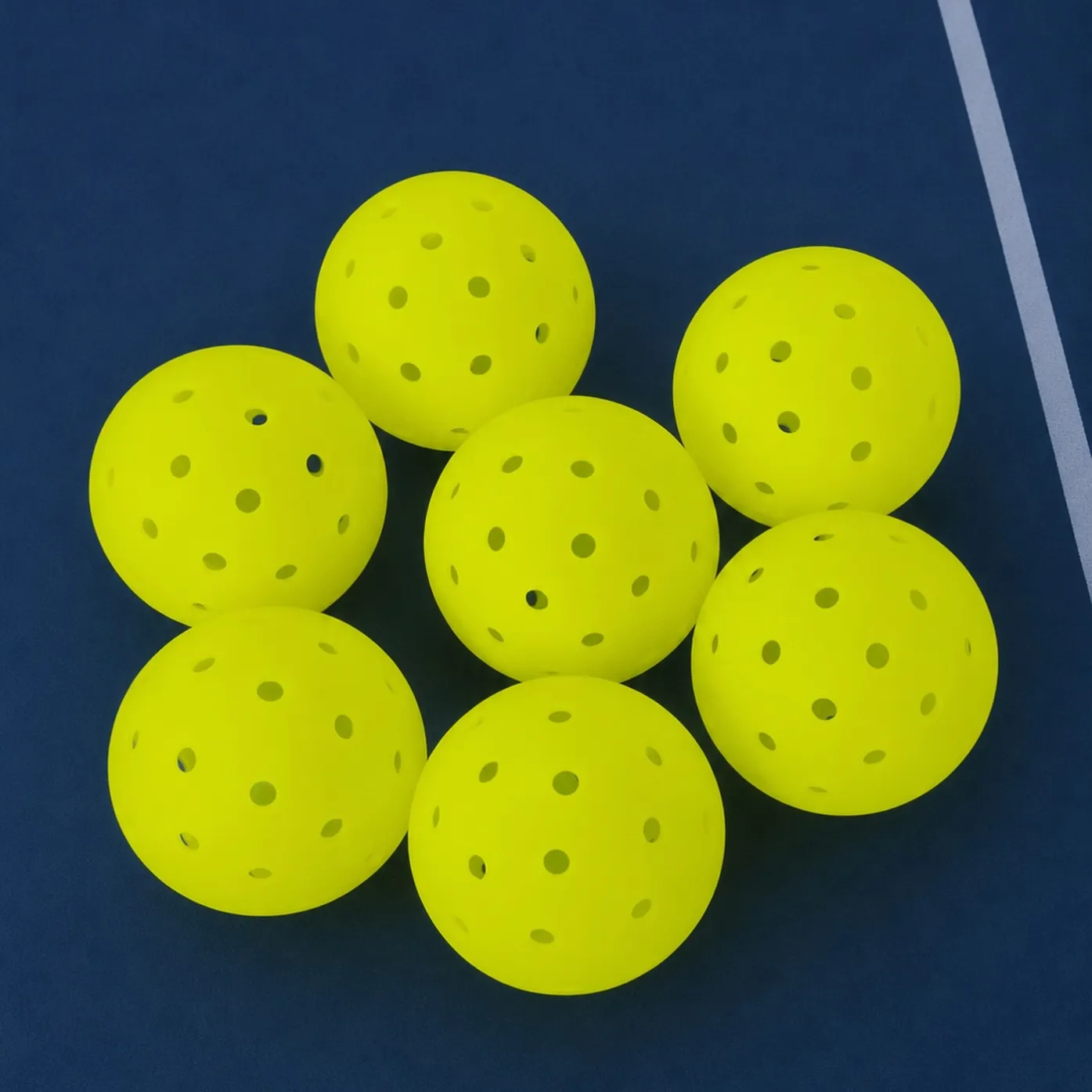
A useful pickleball sample test should answer one practical question: will several balls from the same proposed specification behave consistently for the buyer’s intended use?
One good rally with one ball is not enough. Buyers should compare several coded samples, record the conditions, use the same method and separate measurable observations from personal preference. This is not certification, but it gives the buyer and manufacturer a clearer basis for sample approval, product improvement and bulk-production control.
Start With the Intended Use
The evaluation plan should match the real program. A ball for club recreation, cold-weather outdoor play, indoor coaching, retail sale or a non-sanctioned product trial may need different priorities.
Before testing, record:
• intended indoor or outdoor use;
• court surface and typical temperature range;
• player level;
• target speed and feel;
• expected session frequency;
• whether sanctioned-tournament approval is required;
• color, logo and packaging requirements.
Do not treat a sample as approved competition equipment. If tournament use is required, check the current rules and official approved-ball list for the exact model.
Use Several Coded Balls, Not One Favorite Sample
Give each sample a simple code and keep brand or formulation information hidden from players when practical. Include several balls from each version rather than letting one unusually good or poor ball decide the result.
A small club trial might begin with 6 to 12 balls per version. This is a practical field-test quantity, not a formal sampling standard. Larger orders need an agreed inspection plan based on the specification, batch size and buyer requirements.
Keep one reference ball that players already know. The goal is not to claim that a new sample copies another brand. Record where the new sample feels faster, slower, harder, softer or less consistent.
- Record Appearance, Weight and Dimensions
Inspect every sample under the same lighting. Record deformation, seam condition, hole edges, color variation, surface marks and logo quality. Where suitable equipment is available, record diameter, weight and out-of-round variation using the same calibrated tools and measurement points.
- Compare Bounce Consistency
The highest bounce is not automatically the best result. Buyers should look for an appropriate and repeatable rebound for the intended use.
For a simple comparative check:
- use the same flat, hard and level surface;
- condition all samples in the same environment;
- release each ball from the same measured height without adding force or spin;
- repeat the drop several times;
- record rebound height or use slow-motion video with a fixed scale;
- compare variation within each sample group.
This field method is useful for screening and development feedback. It should not be presented as official certification unless the required standard, equipment and test authority are actually used.
- Check Roundness, Flight and Playing Behavior
Roll each ball on a flat surface and watch for obvious wobble. During play, use repeatable feeds or drills and record unexpected flight, excessive speed changes and unstable behavior.
Ask players to score serve and return predictability, bounce consistency, flight stability, speed after several games, sound and feel, and roundness after impact. Comments are most useful when they identify the sample code, court, temperature and length of play.
- Track Durability Over Time
Durability cannot be proved by one hard hit. Rotate multiple balls through normal play and record cumulative sessions or hours. Inspect for cracks around holes or seams, softening or loss of rebound, permanent deformation, surface wear, color change, and changes after hot or cold conditions.
When a ball fails, photograph it and record the sample code, temperature, court, approximate play time and failure location. This turns a complaint into usable manufacturing feedback.
- Test Visibility in the Real Environment
Visibility depends on more than color. Court surface, background, lighting, weather and player eyesight all matter. Test the sample during actual hours of use. For custom colors or marbled designs, confirm that appearance does not interfere with the intended recreational experience.
- Convert Results Into an Approval Record
Separate the decision into approved characteristics, acceptable variation, required changes, and open questions needing another sample. Attach sample codes, specification version, photographs, test conditions and player feedback. Keep a traceable reference sample with the final specification and artwork version.
The bulk-order inspection should check the agreed characteristics rather than relying on memory or a vague instruction to “make it like the sample.”
A Note on SYNLY’s 48-Hole Ball
SYNLY’s 48-hole pickleball is available for bulk production. All colors can be customized for OEM projects; the exact shade, court visibility and acceptable batch color tolerance should be approved with a physical sample. Final specifications, MOQ, logo and packaging options, and lead time are confirmed for each order.
The product and quality-control focus is consistent rebound and better durability. We do not claim that the ball matches a well-known brand or that it is approved for sanctioned competition. Experienced players, clubs and reviewers are welcome to test samples and share specific improvement suggestions.
Frequently Asked Questions
How many pickleballs should be included in a sample test?
Use several balls from each version. Six to 12 per version can be a practical starting point for a small field trial, but it is not a formal sampling standard.
Is the ball with the highest bounce automatically better?
No. Evaluate whether the rebound is appropriate and consistent for the intended use.
Can one ball prove durability?
No. Test multiple balls over documented sessions and conditions.
Does an internal field test prove tournament approval?
No. Field tests support development and purchasing decisions. Sanctioned-tournament use requires the exact model to meet applicable rules and appear on the current official approved-ball list.
Can buyers evaluate SYNLY’s 48-hole ball?
Yes, subject to current sample availability and the agreed shipping arrangement. Tell us your market, court type, temperature range and evaluation priorities.
Request a Sample Evaluation Plan
Send the intended use, target market, quantity range, court conditions, performance priorities and packaging needs. SYNLY can confirm available sample configuration and discuss a practical evaluation path.
Email: parry@synlypickleball.comWhatsApp: +86 15067540770
Product details: https://synlypickleball.com/products/48-hole-climate-ready-pickleballContact: https://synlypickleball.com/contact-us
Official References
USA Pickleball Equipment Standards Manual: https://equipment.usapickleball.org/docs/Equipment-Standards-Manual.pdfUSA Pickleball Approved Ball List: https://equipment.usapickleball.org/ball-list/