Aug 1, 2026Manufacturing Process
Pickleball Factory Audit Checklist: 12 Questions to Ask Before Choosing an OEM Supplier
Use this 12-point pickleball factory audit checklist to evaluate materials, molding, quality control, capacity and OEM support before choosing a supplier.
RELATED SYNLY RESOURCES
Pickleball material guide: https://www.synlypickleball.com/posts/how-pickleball-ball-materials-affect-durability-and-performance-exploring-pp-pe-tpe-and-new-polymer-developmentInjection molding comparison: https://www.synlypickleball.com/posts/injection-molding-vs-rotational-molding-pickleball-balls-how-different-manufacturing-processes-affect-performanceCustom pickleball solutions: https://www.synlypickleball.com/custom-pickleball-productsContact SYNLY: https://www.synlypickleball.com/contact-usChoosing a pickleball supplier is not only a price comparison. For an OEM buyer, the real question is whether the factory can repeat the same performance from an approved sample through every production batch.
THE 12-POINT PICKLEBALL FACTORY AUDIT CHECKLIST
Use this checklist to review a supplier's manufacturing scope, material control, tooling, inspection methods, performance testing, climate testing, prototyping, customization, capacity, sample approval, certification support and communication.
- WHAT DOES THE FACTORY ACTUALLY MANUFACTURE?
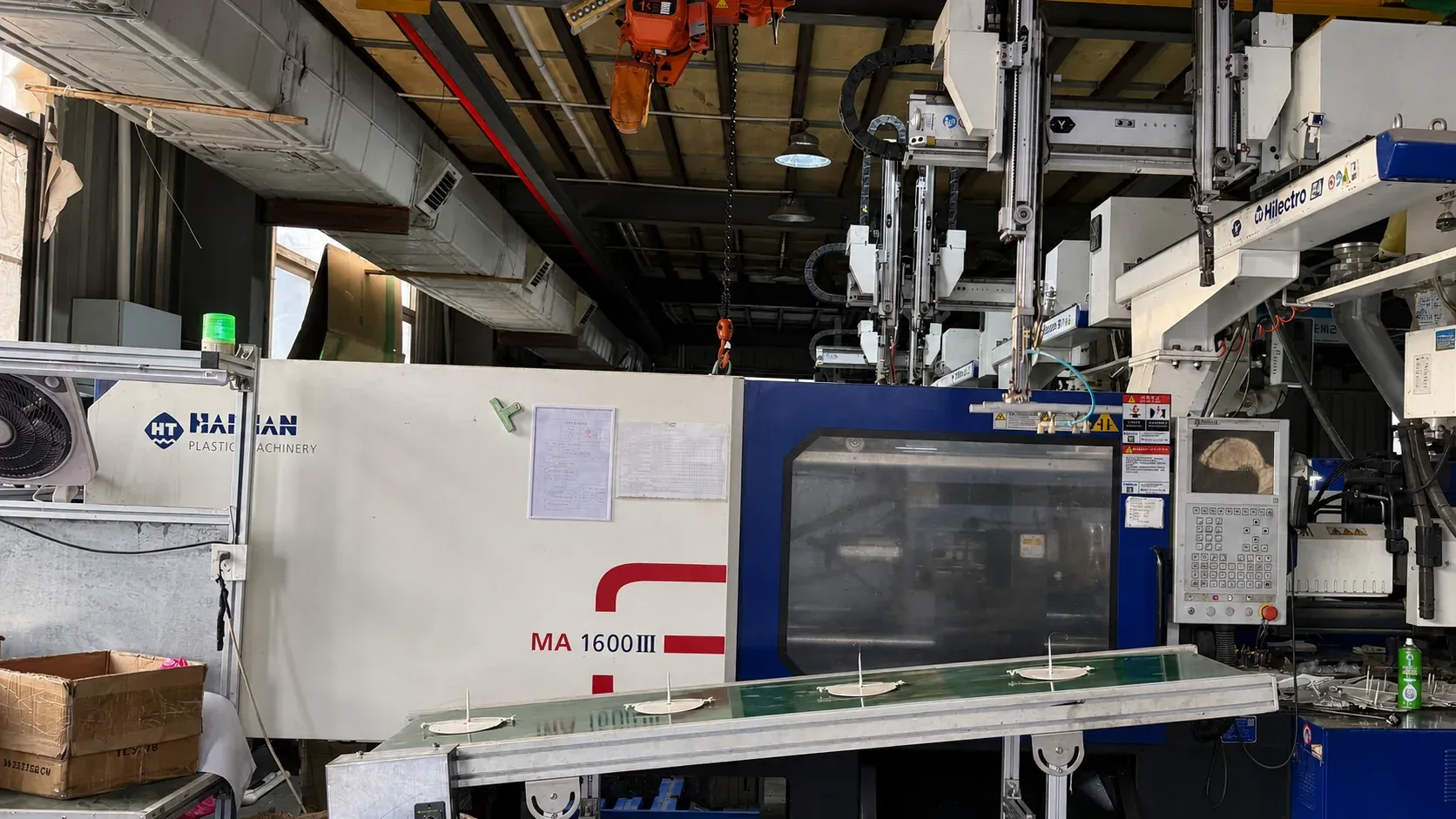
Ask which steps are completed in-house and which are outsourced. For pickleball balls, confirm who controls material preparation, molding, trimming, printing, testing, packing and final inspection. Qualified subcontracting can work, but responsibility must be clear and nonconforming products must be traceable.
- ARE MATERIAL SPECIFICATIONS CONTROLLED AND TRACEABLE?
Polymer selection influences impact resistance, elasticity, hardness, sound and temperature behavior. Asking only whether a ball is made from PP, PE or TPE is not enough. Different resin grades, additives, recycled content and blending ratios can produce very different results.
Request a written material specification, an approved color standard and a lot-identification method. Check whether raw materials are labeled and stored in a way that prevents mixing.
- HOW ARE MOLDS AND HOLE GEOMETRY MANAGED?
Small changes in wall thickness, roundness, seam quality, hole diameter or hole distribution can affect flight and durability. Ask how the mold is maintained, how cavities are identified and how dimensional drift is monitored.
A capable supplier should be able to discuss mold structure, venting, cooling balance and maintenance intervals in practical terms. This shows whether the factory understands how tooling decisions influence repeatable performance.
- WHAT QUALITY CHECKS HAPPEN DURING PRODUCTION?
Final inspection alone cannot correct an unstable process. A useful quality plan normally includes incoming material checks, first-article approval, patrol inspection during molding and final lot inspection before packing.
Ask to see the actual inspection sheet. It should define what is measured, the inspection frequency, acceptable limits and the person responsible. Also ask how the factory handles a failed check.
- WHICH PERFORMANCE TESTS ARE MEASURABLE?
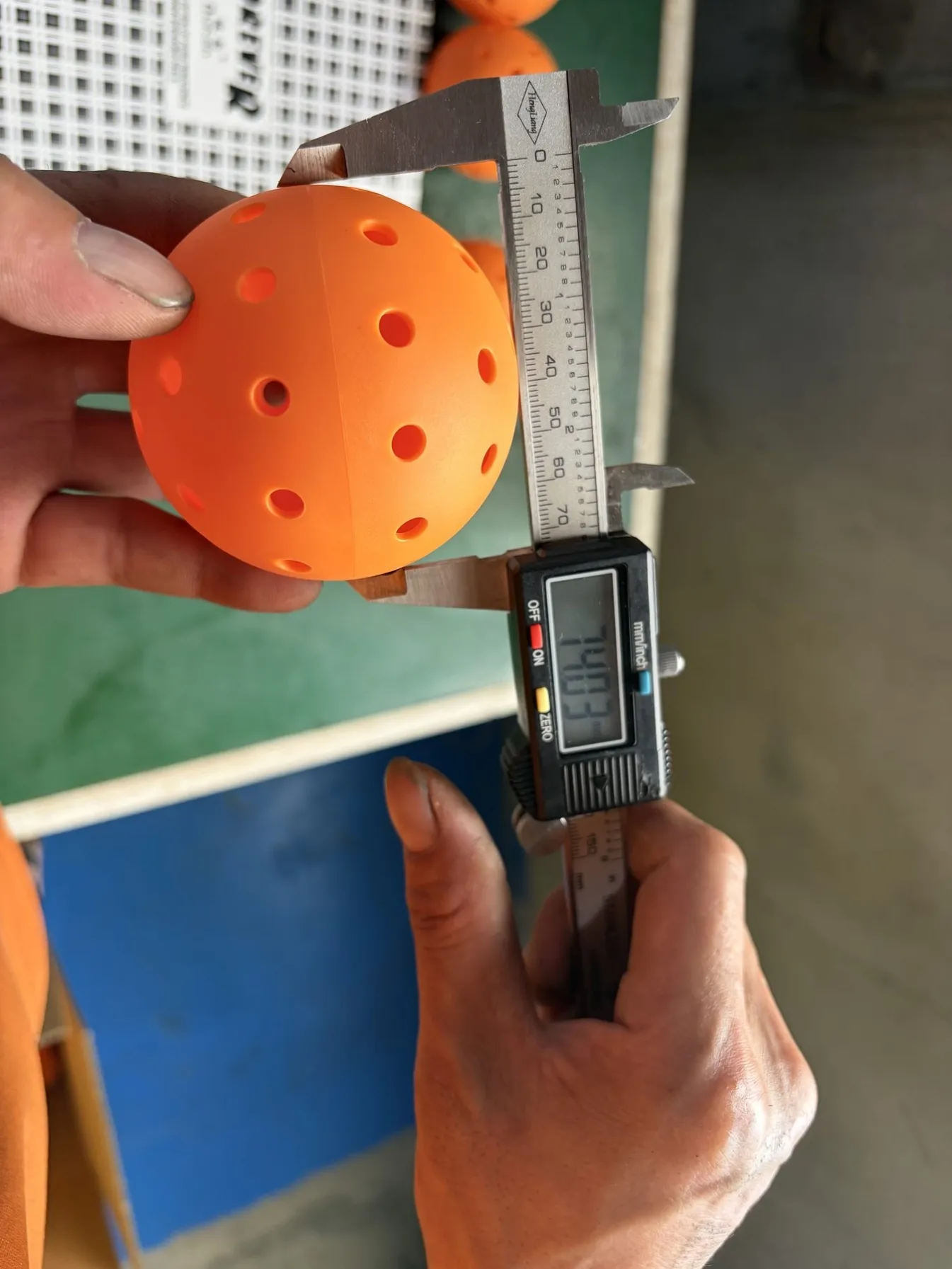
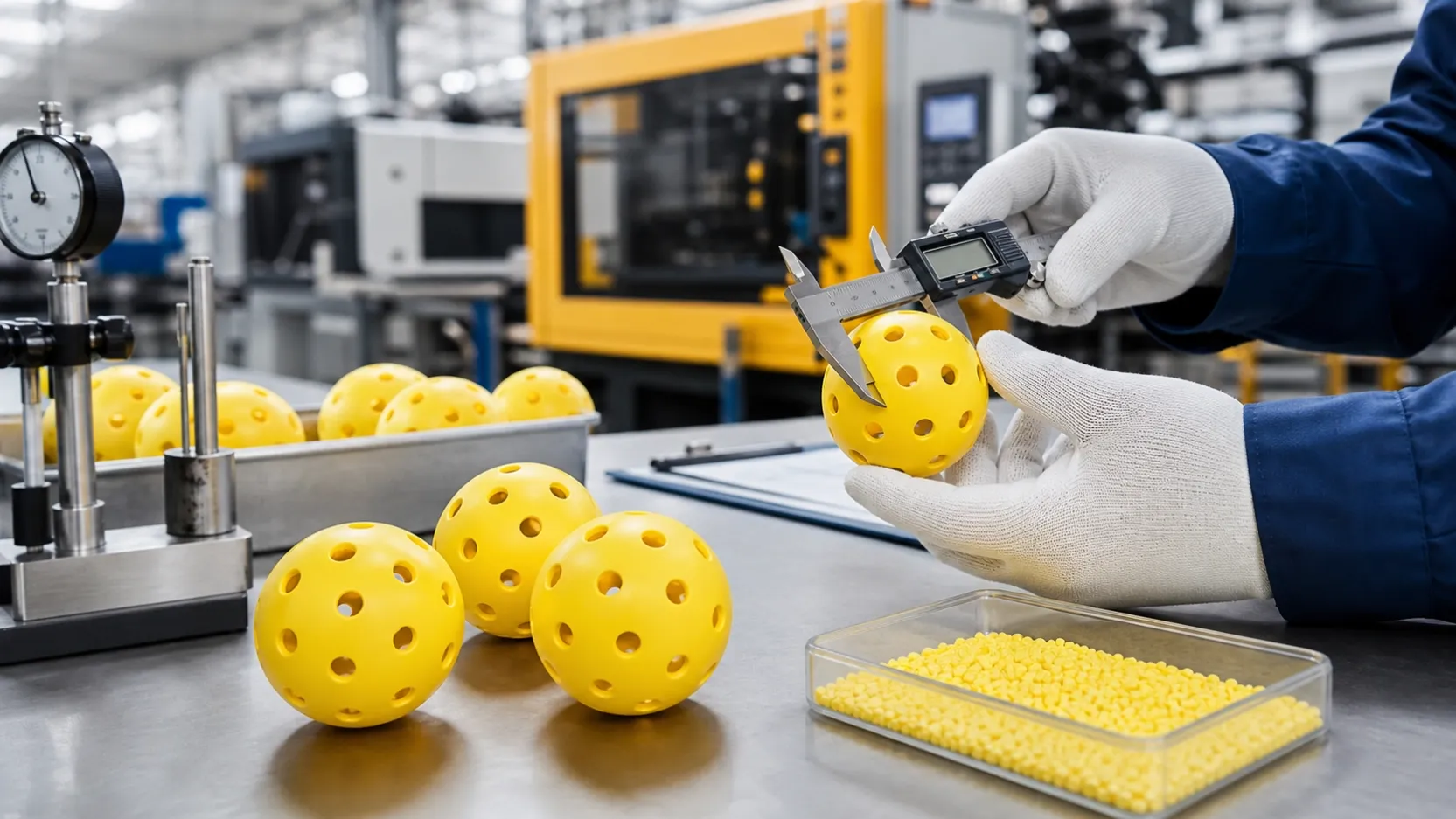
Words such as durable, balanced and tournament quality need measurable definitions. Depending on the product brief, buyers may specify diameter, weight, roundness, hardness, bounce consistency, compression response, rotational balance and repeated-impact durability.
Before mass production, agree on both the target and the test method. Drop height, test surface, conditioning time and measuring equipment must be consistent.
- CAN THE BALL PERFORM ACROSS DIFFERENT TEMPERATURES?
Cold conditions can make some polymers more brittle, while high heat can soften a ball or change its shape. If the target market includes strong seasonal variation, temperature performance should be part of development rather than a last-minute claim.
Ask how samples are conditioned before testing and what acceptance criteria are used after cold and heat exposure. Compare shape, bounce and impact durability against an approved control sample.
- CAN THE FACTORY PROTOTYPE BEFORE MASS PRODUCTION?
OEM projects often need several development rounds. Design support and rapid prototyping can identify size, structure and assembly issues before expensive tooling changes.
Ask for a clear path: concept review, 3D model, prototype, tooling, first molded sample, testing, correction and golden-sample approval. Each stage should have a defined output and decision point.
- HOW ARE CUSTOM COLORS, LOGOS AND PACKAGING CONTROLLED?
Customization extends beyond placing a logo on a standard ball. Color consistency, print position, abrasion resistance, barcode accuracy, carton strength and packaging fit all influence the buyer's brand experience.
Use reference standards rather than visual descriptions alone. Approve color under consistent lighting, confirm artwork and location, and review a complete packed sample before mass production.
- ARE CAPACITY AND LEAD-TIME CLAIMS REALISTIC?
Ask for capacity by product and process, not one factory-wide number. Clarify how many machines and molds are available for your item, expected output per shift, maintenance downtime and peak-season loading.
Confirm lead times for materials, printing and packaging, plus the recovery plan if a machine or mold is unavailable. A reliable partner explains constraints and buffers honestly.
- IS THERE FORMAL SAMPLE APPROVAL AND CHANGE CONTROL?
The approved sample should become the production reference. Many sourcing problems begin when a resin grade, color formula, mold setting, logo ink or packaging component changes without written approval.
Define a golden sample and a signed specification sheet. Require notification before any change that may affect appearance, performance, compliance or cost.
- WHAT CERTIFICATION AND TESTING SUPPORT IS AVAILABLE?
Certification is not a substitute for manufacturing control, and requirements differ by product and market. Ask whether the supplier can prepare samples, specifications and production records for independent testing.
Do not accept vague claims such as certification guaranteed. Define the applicable requirement, test the correct production-representative sample and keep documentation connected to the approved design.
- HOW STRONG IS COMMUNICATION AFTER THE ORDER?
OEM success depends on how quickly technical questions, sample feedback and production deviations are communicated. During quotation, observe whether the supplier answers specific questions or repeats generic sales language.
Agree on one responsible contact, milestone updates and an escalation path for quality issues. A strong partner reports problems early and proposes corrective actions.
COMMON FACTORY-AUDIT RED FLAGS
• The sample is excellent, but the factory cannot provide a written specification.
• Material grades and production lots are not identified.
• Quality claims are not connected to a test method or acceptance limit.
• The supplier avoids explaining which processes are outsourced.
• Lead times are promised without reviewing tooling and production load.
• Changes can be made without buyer approval.
• Certification is promised before the product and test standard are defined.
WHY OEM BUYERS WORK WITH SYNLY
SYNLY combines more than 30 years of injection-molding experience with a focused commitment to pickleball product development. Our capabilities include injection-molded product manufacturing, material evaluation, 3D-printing support, OEM/ODM customization and quality-control planning.
We are also developing new pickleball concepts, including a 48-hole design, with attention to durability, elasticity and performance under different climate conditions. Our role as a factory is to turn a buyer's idea into a testable, manufacturable product—not simply to add a logo to an existing item.
FREQUENTLY ASKED QUESTIONS
What should I request before ordering pickleballs from a factory?
Request a product specification, material information, test method, complete sample, quotation, lead time, packaging details and written change-control terms.
How can I compare samples from different pickleball manufacturers?
Condition and test every sample using the same method. Compare weight, diameter, roundness, bounce, hardness and repeated-impact durability rather than appearance alone.
Should an OEM buyer always visit the factory?
A visit is valuable for strategic or high-volume projects, but a structured remote audit can also review process videos, equipment lists, inspection records, live sample testing and production documentation.
What is a golden sample?
A golden sample is the mutually approved physical reference for appearance and performance. It should match the signed specification and remain protected for comparison with mass production.
Can SYNLY help develop a new pickleball product?
Yes. SYNLY can discuss materials, structure, prototyping, tooling, molding, customization and quality planning for OEM/ODM projects. Final feasibility, cost and testing requirements depend on the design brief.
START YOUR PICKLEBALL OEM PROJECT
Use this checklist when comparing suppliers, then share your target market, product specifications, expected quantity and testing requirements with our team. Contact SYNLY to discuss samples, customization or a new pickleball development project.